

Set in the coastal city of Gqeberha (Port Elizabeth), where South African aviation history stretches back more than a century through pioneers such as Allister Miller, a First World War pilot, aviation entrepreneur, and one of the founding figures of commercial aviation in South Africa, Progress Flight Academy offers a world-class environment for professional pilot training. Miller was instrumental in establishing early passenger and airmail routes in the country, including founding Union Airways in Port Elizabeth, which later became the foundation of South African Airways. His vision helped position the city as one of the birthplaces of civil aviation in South Africa.
With over 45 years of experience, Progress has earned a long-standing reputation for producing skilled, disciplined, and highly employable pilots - trained to international standards and prepared for the realities of modern aviation.
While many flight schools meet the minimum legal requirements, very few consistently achieve the operational capability demanded by today’s airlines and commercial operators. Progress Flight Academy is recognised as one of the select institutions in South Africa whose training standards align with best international practice, producing graduates who transition successfully into advanced aircraft and airline First Officer training.

Progress Flight Academy specialises in full-time, premium integrated flight training for students with no prior flying experience. Our flagship Integrated Professional Pilot Courses take students from zero hours through to a Commercial Pilot Licence with Instrument Rating and Multi-Engine Rating (CPL/IR/ME), or for those pursuing airline careers, an Integrated Airline Transport Pilot Licence (ATPL) pathway.
Unlike modular courses that often quote minimum legal hours and rely heavily on later “hour building,” Progress’s integrated programmes are structured according to European Aviation Safety Agency (EASA) best practice. This approach includes significantly increased instructional hours — particularly in instrument and multi-engine flying — ensuring students achieve true proficiency rather than simply meeting regulatory minimums. As a result, the majority of our students complete their training on budget and on schedule, without the need for extensive additional flying.
For prospective students, assessing the true quality of flight training can be difficult. One of the most reliable indicators is the structure of the course and the number of instructional hours allocated to each training phase.
The following table compares the Progress Flight Academy International CPL/IR (ME) Integrated Course with a typical modular training programme. The differences highlight the depth of instruction and operational exposure built into Progress’s integrated approach.
The hours allocated within Progress’s integrated programmes are designed to allow the average student to achieve proficiency without requiring excessive additional flights, supporting both cost certainty and training consistency.
| Item | Progress Flight Academy | Typical Modular Course School |
| Private Pilot Standard / Licence | 73 hours | 45 hours |
| Instrument Training Hours | 70 hours | 40 hours |
| Multi-engine Aeroplane Hours | 42 hours | 15 hours |
| Instrument Training Hours (Multi-engine) | 20 hours | 6 hours |
| Multi-engine Aeroplane Solo | 2 hours | 0 hours |
| Total Flight Hours | 235 hours | 200 hours |
Progress Flight Academy operates from Progress Aerodrome (FAPZ), a SACAA-licensed private aerodrome reserved exclusively for the Academy’s use. This dedicated environment allows students to train efficiently, safely, and without congestion. With the general flying area located just 7 km away, students spend more time flying and less time taxiing or waiting for air traffic clearance — maximising the value of every flight hour.
One of Progress’s greatest strengths is its exceptional geographic location. Situated along the Southern Cape coast, the Academy benefits from proximity to Port Elizabeth International Airport, just 23 km away. Along with nearby airports in George and East London, this region offers some of the best access in South Africa to controlled airspace, precision Instrument Landing Systems (ILS), and real-world instrument weather conditions — a critical advantage for serious instrument flight training.
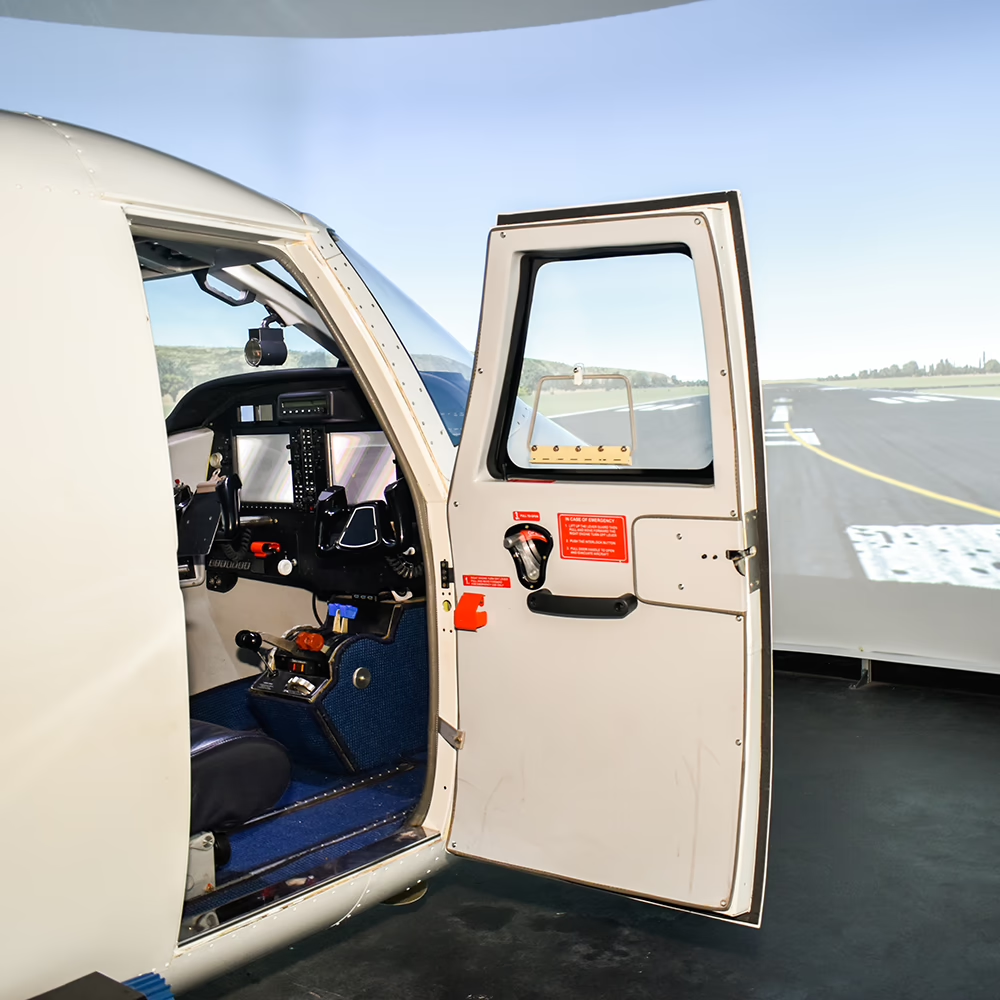
Progress Flight Academy operates a fleet of late-model single and multi-engine aircraft, including Piper Warriors and new-generation Vulcanair P68R multi-engine aeroplanes equipped with modern Garmin EFIS avionics. These aircraft are supported by advanced FNPT II simulators designed to replicate the actual cockpit environment, allowing students to build confidence and competence before transitioning to complex flight operations.

Progress Flight Academy offers a fully immersive residential campus experience designed to minimise distractions and maximise focus. Students are accommodated in furnished, single study bedrooms within on-site lodges, with shared facilities, wireless internet, and communal living spaces.
Courses include full-board accommodation, with three meals a day prepared by on-site catering staff, laundry services, and course-related transport. Campus facilities include a dining hall, lounges, a swimming pool, a clubhouse with gym facilities overlooking the runways, and recreational areas including a football field. Regular outings to local attractions and Gqeberha’s Blue Flag beaches help ensure a balanced and supportive student lifestyle.


Progress Flight Academy welcomes students from around the world. Our programmes are designed to meet both South African and international licensing requirements, enabling graduates to convert their qualifications within other ICAO member states. English language proficiency is central to our training, reflecting the realities of global aviation and airline operations.
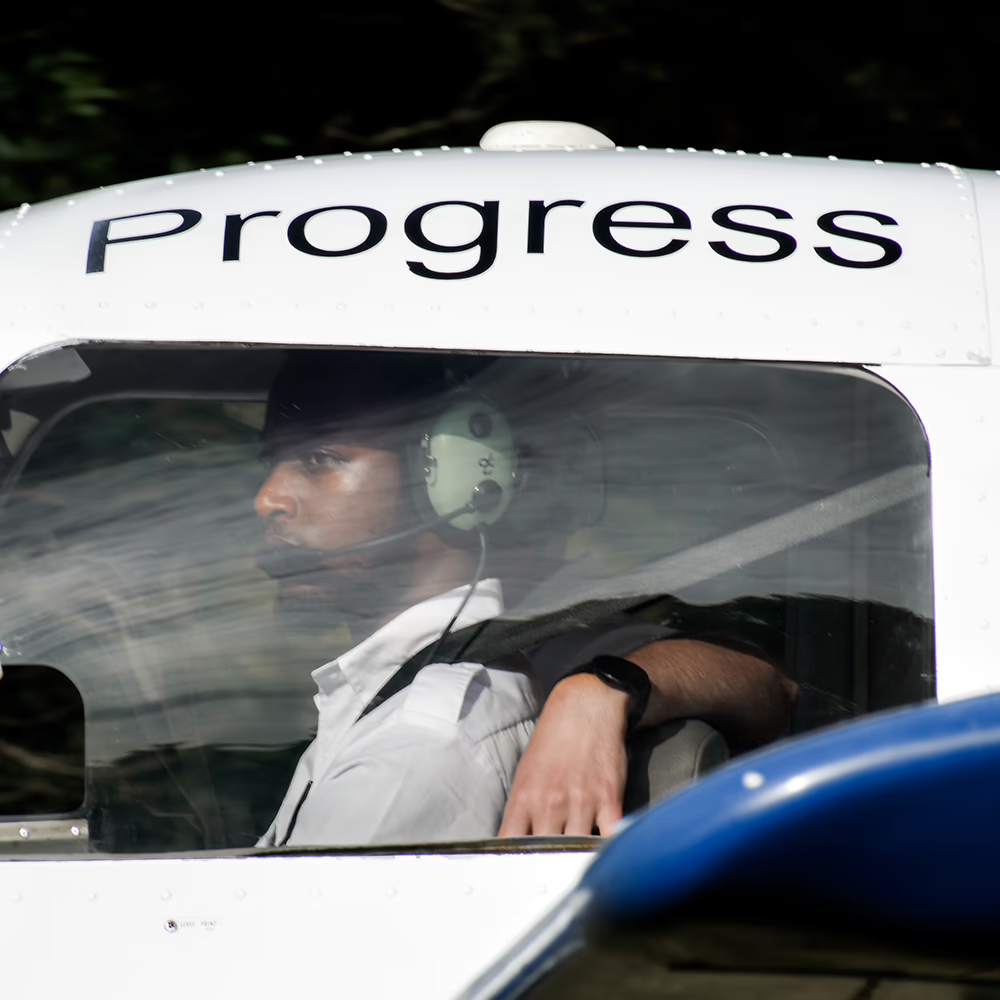
At Progress, the goal is not simply to train pilots — but to develop professional aviators with genuine operational capability. Structured ground school, disciplined flight training, and increased instructional hours ensure graduates leave with the technical knowledge, practical skill, and mindset required to succeed in demanding aviation environments.
Progress has a proven track record of graduates successfully transitioning into First Officer training on jet aircraft, both locally and internationally — a testament to the depth, structure, and quality of its integrated training programmes.


